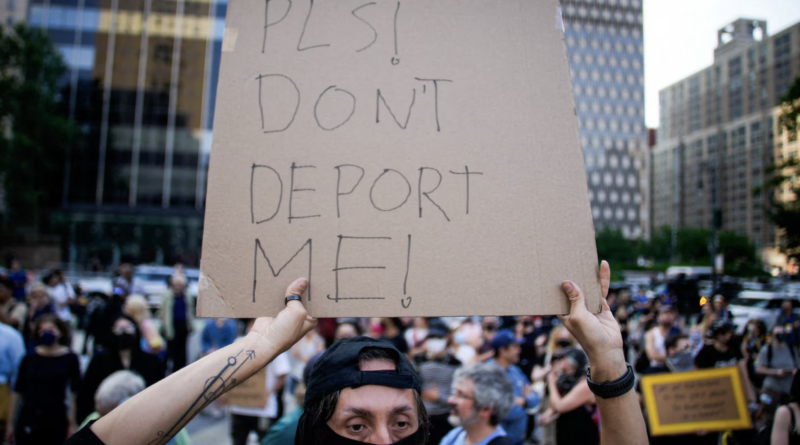
Immigration Crisis in the U.S.: Explosive Protests Expose the Hidden Impact of Federal Crackdow
Immigration policy has returned to the center of political debate in the United States as federal enforcement operations expand and trigger a wave of protests nationwide. Over the past weeks, demonstrations have intensified in several states, with Minnesota emerging as one of the main focal points of public tension. The situation reflects deeper national divisions over border security, immigration enforcement, and the balance between federal authority and local governance.
Federal Immigration Operations Under Scrutiny
U.S. immigration authorities have increased enforcement actions in multiple regions, citing national security and border control priorities. Officials argue that stricter measures are necessary to address undocumented immigration and organized smuggling networks. According to federal representatives, operations are being conducted within legal boundaries and are aimed at individuals with prior removal orders or criminal records.
However, civil rights groups and local leaders have raised concerns over the scale and methods of enforcement. Critics claim that the operations are generating fear within immigrant communities and disrupting families, even in cases involving long-term residents with deep ties to their local communities.
Minnesota Becomes a Flashpoint
Minnesota has become one of the most visible battlegrounds in the current immigration debate. Protests erupted following a series of enforcement actions that drew national attention. Demonstrators gathered in major cities, demanding greater transparency, accountability, and limits on federal involvement in local jurisdictions.
State and city officials have expressed frustration over what they describe as a lack of coordination between federal agencies and local authorities. Some leaders argue that aggressive enforcement undermines trust between immigrant communities and law enforcement, making public safety efforts more difficult.
Nationwide Protests Gain Momentum
Beyond Minnesota, protests have spread to several major U.S. cities, including Los Angeles, Chicago, New York, and Seattle. Activists are organizing marches, economic boycotts, and calls for a nationwide general strike to oppose current immigration policies.
Social media has played a key role in amplifying the movement, with hashtags related to immigration enforcement trending across platforms. Public figures and celebrities have also voiced support for protesters, bringing even more attention to the issue.
Political Reactions and Division
The political response has been sharply divided. Supporters of stricter enforcement argue that border control is essential to national sovereignty and economic stability. They maintain that failure to enforce immigration laws weakens the rule of law and places additional strain on public resources.
Opponents counter that current policies are overly punitive and fail to address the root causes of migration, such as economic instability and violence in migrants’ home countries. Several lawmakers have renewed calls for comprehensive immigration reform, emphasizing pathways to legal status and stronger protections for families.
Economic and Social Impact
Experts warn that prolonged unrest could have broader economic consequences. Industries that rely heavily on immigrant labor, such as agriculture, construction, and hospitality, are closely monitoring developments. Some business leaders fear that uncertainty surrounding enforcement could disrupt labor markets and local economies.
At the same time, community organizations report increased demand for legal assistance, counseling, and emergency support services as families navigate the ongoing uncertainty.
What Comes Next
As protests continue, federal officials have signaled no immediate plans to scale back operations. Meanwhile, advocacy groups are preparing legal challenges and lobbying efforts aimed at influencing future policy decisions.
The unfolding situation highlights a long-standing national debate that shows no signs of resolution. Immigration remains one of the most complex and emotionally charged issues in American politics, with implications that extend far beyond borders and enforcement statistics.
Conclusion
The intensifying immigration protests across the United States underscore a country deeply divided over how to manage its borders and treat immigrant communities. As enforcement actions expand and public opposition grows, the coming months are likely to play a critical role in shaping the future of U.S. immigration policy.
Do you think stricter enforcement will continue, or is the U.S. approaching a turning point in immigration reform?